Looking after your dog’s coat, between visits.
Most of a great coat happens at home. This is the full guide — the tools, the method, and the routines by coat type — exactly as we’d show you across the table.
Take a comb and work it right down to the skin — not just over the top. If it glides through, you’re good. If it catches or stops, there’s matting underneath. The surface can look perfect while the coat next to the skin is solid, so the top layer tells you nothing. Do this on the usual trouble spots: behind the ears, under the legs, the collar area, and the back end.
Few tools, good ones.
The pet aisle would sell you a drawerful. You need about three things, chosen well — bring them to a visit and we’ll happily check they suit the coat.
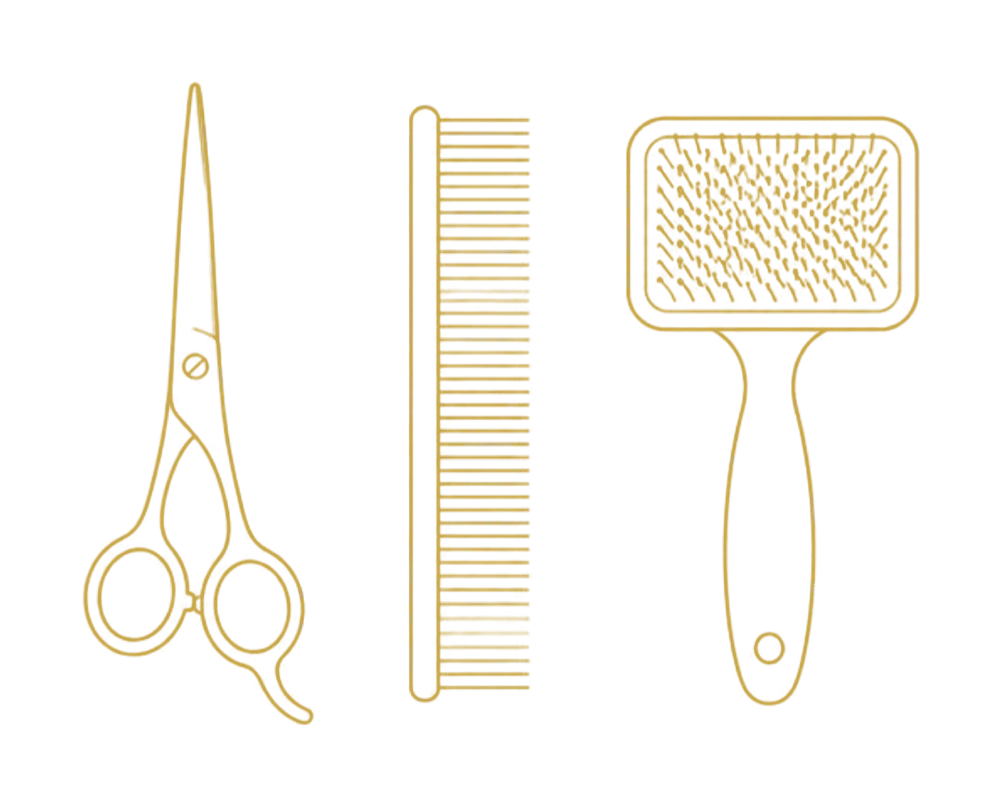
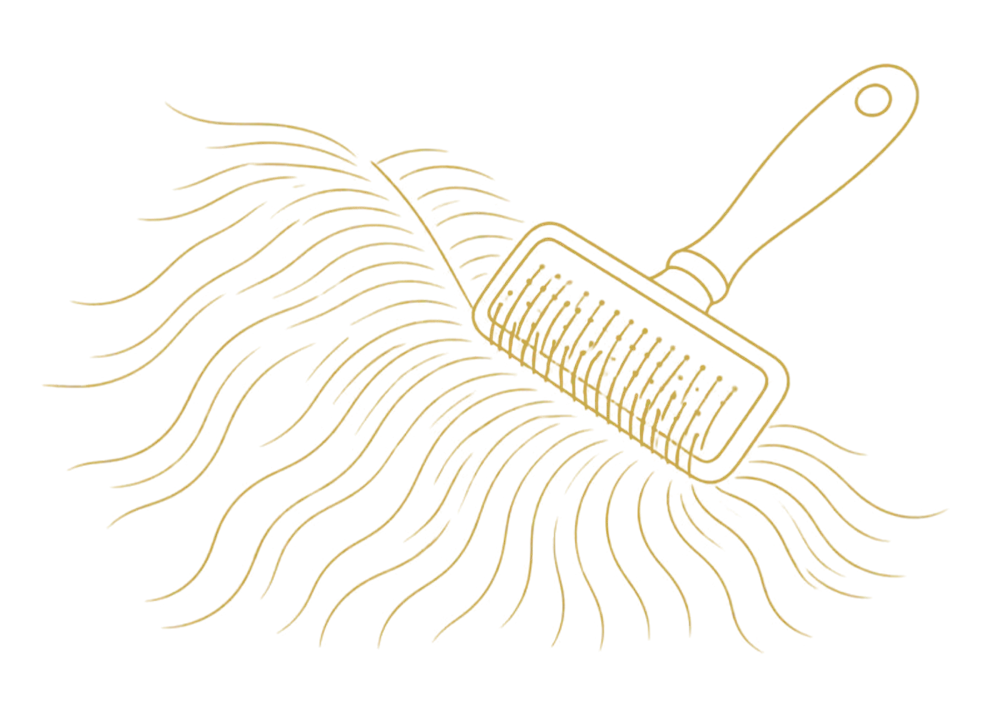
The workhorse — fine bent-wire pins that reach into the coat rather than skating over it. Soft pressure; the brush does the work, not your wrist.
The honest one. Wide teeth first, then fine. If it glides to the skin, the coat is genuinely knot-free; if it snags, the slicker isn’t finished. Never trust a brush without checking with a comb.
A light conditioning mist before brushing stops static and snapping, and makes the whole job kinder. Water alone can tighten a knot — a proper spray loosens it.
For double coats only — it lifts the loose undercoat a slicker can’t reach. Used gently and only in season; overdone, it thins coat that should stay.
A soft rubber brush for short, smooth coats — where it lifts out dead hair and loose undercoat that a bristle brush just skims over. It works dry or in the bath, where it pushes the shampoo right down to the skin.
Gimmick gloves, dematting blades, and anything promising to do the whole job in one pass. A slicker, a comb, and a little patience outperform them all.
Line brushing, properly.
One technique covers nearly every coat. It’s slower to describe than to do — and once your hands know it, five minutes goes a long way.
Settle first
Pick a calm moment — after a walk, not before dinner. A non-slip mat, a few treats within reach, and no ambition to do the whole dog. One section done kindly beats a whole coat done tensely.
Work in sections
Lift the coat with one hand and brush the layer beneath it, from the skin outward, in lines. This is line brushing — the only method that actually reaches where matts begin. Brushing only the surface polishes the top and lets the undercoat matt quietly beneath.
Slicker, then comb
Slicker through each section until it moves freely, then follow with the metal comb, right to the skin. Meet a snag? Hold the hair at the root so the tug never reaches the skin, and work the knot from its tip downward — never yank from the top.
The comb test
The finish line for every session: the comb glides from skin to tip everywhere you’ve worked. Glide means done. Snag means almost. It’s the same test we use in the studio.
End before they’re done
Stop while your dog is still relaxed, and end with something good. Dogs who learn that brushes predict calm and treats become dogs who lean into a groom — and that changes every visit they’ll ever have, here included.
Where matts actually start.
Not along the back, where everyone brushes — in the soft, rubbed, hidden places. Give these ten seconds each and you’re ahead of nearly every matt we’ve ever met.
Soft, fine hair and constant movement — the classic first matt. A ten second comb through most days keeps it clear.
Warm, friction heavy, and easily missed because dogs are ticklish there. Little and gentle, but don’t skip them.
Wherever a harness or collar rubs, the coat matts beneath it. Take the harness off at home, and comb its path daily if your dog lives in one.
The feathering on the back legs and tail collects burrs, dampness, and knots on every walk. A quick comb after wet or wild walks pays for itself.
Hair between pads picks up grit and mud, and matts tight to the skin where it really hurts. Check weekly; we keep it trimmed at each groom.
Food, water, and sleep in the eye corners set like plaster in a beard. A damp cloth and a fine comb daily, and the face stays sweet.
Your dog’s routine.
Find the coat, follow the routine. Crossbreeds can carry any of these — we’ll tell you which one you’re living with at the consultation.
Wool & curly coats
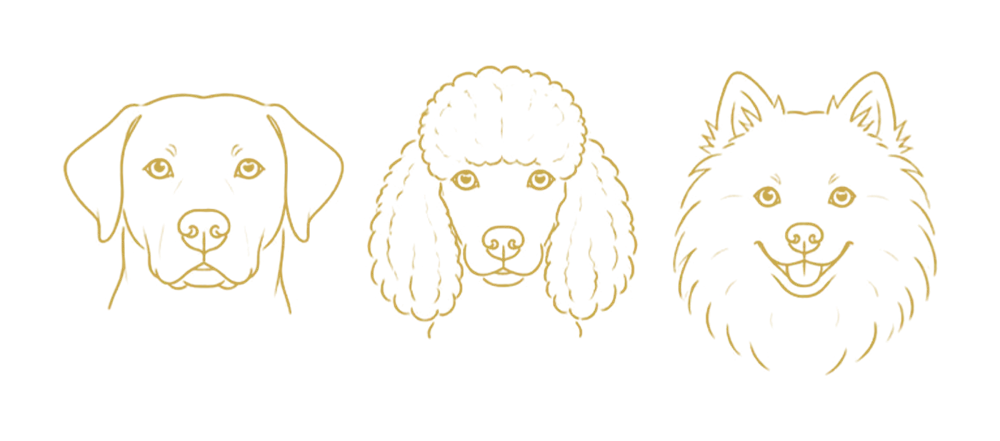
Poodles and poodle crosses, bichonsThe coats that matt fastest — the curl catches shed hair instead of dropping it, and it matts from the skin out. Line brush thoroughly every day or two, slicker then comb to the skin, with extra care behind ears and under the harness.
Watch for: a coat that looks fine but won’t take a comb — wool matts from beneath, invisibly. Groom every 4–6 weeks, without fail.
Double coats
Retrievers, collies, shepherds, huskiesTwo coats in one: a weatherproof top and an insulating under. A weekly session with slicker and rake — daily in the spring and autumn moults — keeps the undercoat moving. A bath & de-shed with us mid-season shifts what home tools can’t.
Watch for: tufts that stay put when the moult starts, and never clip a double coat to “keep them cool” — the coat is the insulation, both ways. Groom every 6–8 weeks.
Wire coats
Border terriers, schnauzers, wire fox terriersA crisp jacket over a soft under — best maintained little and often rather than rescued. A weekly brush and comb keeps it honest.
Watch for: the soft fluff of undercoat overtaking the crisp top — that’s the cue for a visit. Groom every 6–8 weeks.
Silky & drop coats
Shih tzus, yorkies, maltese, spaniel featheringFine hair that knots quietly and quickly — behind ears, under legs, wherever anything rubs. A daily comb-through in sections, mist of detangler first, and never brush it bone-dry. Long styles are beautiful and honest work; shorter trims are a perfectly good life choice.
Watch for: tiny knots at the ear tips and under the collar — pea-sized today is felt next week. Groom every 4–6 weeks.
Smooth coats
Labradors, staffies, beagles, pointersThe easy ones — but not no-work. A weekly once-over with a rubber curry or soft bristle brush lifts shed hair and spreads the coat’s own oils, which is where that healthy shine actually comes from.
Watch for: shedding that carpets the house — a bath & de-shed does more than any amount of hoovering. Groom or bath every 8–12 weeks.
Brush first, dry fully.
The golden rule: never bath a coat that won’t take a comb. Water tightens knots into matts and drying sets them — so brush and comb through first, every time. If the comb won’t glide, skip the bath and book in instead.
Use a mild dog shampoo, diluted, and rinse for longer than feels necessary — leftover shampoo is the commonest cause of the post-bath itch. Then dry properly, all the way to the skin: a damp undercoat left to its own devices is where matts and hot spots both begin. Towels first, then a dryer on low if your dog tolerates it, brushing gently as you go.
And if the answer is “honestly, bath day is chaos” — that’s what we are here for. No judgement; some things are simply easier with a proper tub and a proper dryer.
The weekly once-over.
Nails: if you can hear them click on a hard floor, they’re due. Road-walked dogs part-file their own; carpet and park dogs don’t. Home clipping is easy to get wrong near the quick — a nail trim with us takes minutes, and we’ll happily show you how if you’d like to learn.
Ears: look and sniff, weekly, and that’s mostly it. Clean, pale, and nearly odourless is right; redness, heat, dark wax, or a sour smell is a vet visit, not a grooming matter. Nothing pushed into the canal, ever — cotton buds included.
Teeth: the honest ideal is a short daily brush with a dog toothpaste — never human paste. Start slow, paste on a finger first, and treat it as a trick worth rewarding. Our teeth cleaning add on keeps things maintained between your efforts, with a toothbrush head kept for your dog alone.
Start gently, early.
Everything a grown dog tolerates well was practised as a puppy. A minute a day: touch the paws, lift the ears, look at the teeth, run the soft brush over — all of it unhurried, all of it ending in something good. You’re not grooming yet; you’re teaching that hands mean calm.
Add the sound of a hairdryer at a distance during regular activities. Then let our puppy intro do the rest — a first visit that’s all about the room, the table, and the dryer, with no pressure to achieve anything except a good memory.
Five things to leave to us.
All of these come from love and good intentions. All of them make our job — and your dog’s day — harder.
Scissors near a matt
A matt sits tighter to the skin than it looks, and skin lifts into it. We see the results of kitchen scissor rescues too often — if a knot won’t comb out, leave it for us. It’s never a bother, just mention it at your next groom.
Bathing a knotted coat
Water tightens knots into matts, and drying sets them. Always brush and comb through before a bath — if the coat won’t comb, book in instead of bathing.
Clipping a double coat
Some coats may not grows back the same, and it takes away their insulation against heat as well as cold. If shedding or warmth is the worry, a de-shed is the answer — not the clippers.
Human shampoo
Dog skin runs at a different pH — ours strips theirs, and itching follows. A mild dog shampoo is cheap; use that, diluted, and rinse longer than feels necessary.
Pushing through a struggle
A dog wrestled through brushing learns that brushes mean conflict, and every groom after gets harder. Stop, end warmly, try again tomorrow — and tell us, because we can help rebuild it.
None of this needs to be perfect — a comb that glides most weeks is a triumph. Bring your brushes to any visit and we’ll show you the strokes on your own dog, or ask at the consultation. And for how all of this meets the price, see pricing, explained.
Five minutes at home, and every groom gets gentler.
A handful of slots each week. We’d rather yours be a good one.
We typically book two weeks ahead. We may ask to arrange a meet and greet with you and your dog before the first appointment — at no extra cost.